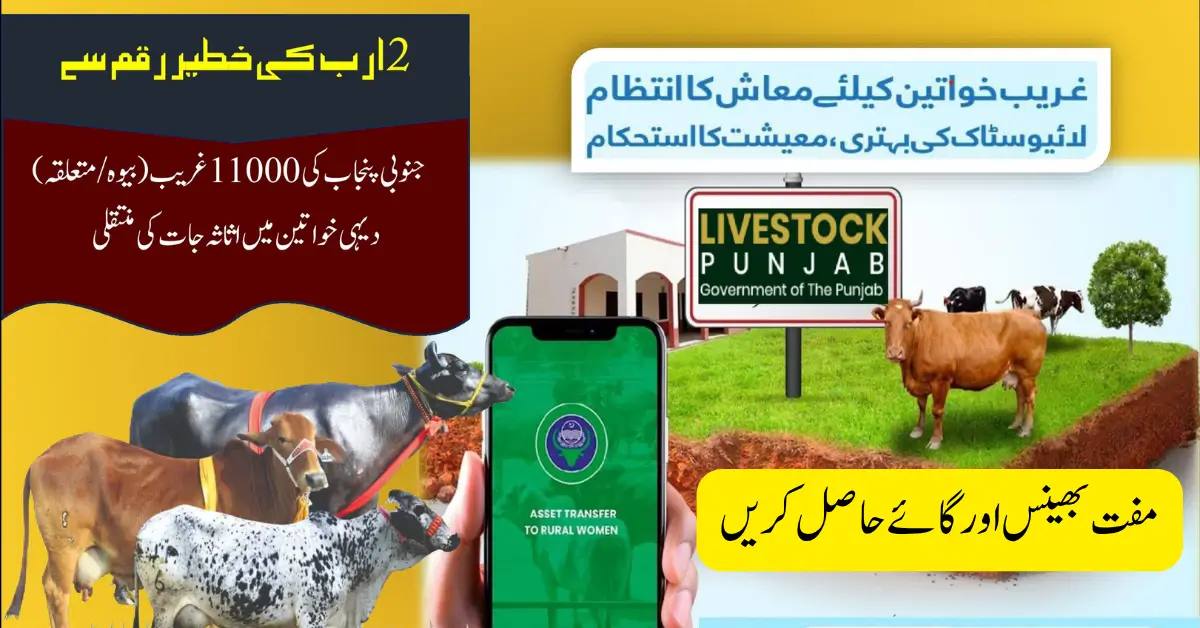
Free Cow and Buffalo
Free Cow and Buffalo Government of Punjab, under the leadership of Chief Minister Maryam Nawaz Sharif, has launched the Livestock Distribution Program 2025, a major welfare initiative designed to empower rural women and strengthen Punjab’s economy. Through this program, widowed and divorced women in South Punjab will receive free cows and buffaloes to help them build sustainable livelihoods.
With a total budget of Rs. 2 billion, this project represents a long-term investment in women’s financial independence and rural development. By giving livestock instead of short-term cash aid, the government aims to create a permanent income source for thousands of deserving families, especially those recovering from floods or poverty.
You Can Also Read: E-Taxi Scheme 2025 Repayment Schedule
A Step Toward Sustainable Empowerment
The Livestock Distribution Program Punjab 2025 is not just a welfare scheme; it is a structured model for creating financial resilience among rural women. Instead of providing temporary relief, the government has focused on asset-based empowerment giving women livestock that can continuously generate income through milk production and calf breeding. Each animal provided becomes a source of daily earnings, food security, and self-reliance.
The initiative’s core purpose is to ensure that women in remote villages are not left behind in Punjab’s development journey. By equipping them with resources that bring consistent profits, the program encourages entrepreneurship at the grassroots level. Rural women who once depended on seasonal labor or financial aid now have a way to run home-based dairy businesses and contribute to the local economy.
Key objectives of the program include:
- Strengthening women’s financial independence through livestock ownership
- Reducing poverty and unemployment in underdeveloped rural areas
- Expanding Punjab’s dairy production capacity and rural markets
- Promoting self-employment among widowed and divorced women
You Can Also Read: How To Create a Driving License In Punjab
Key Facts About the Program
The following table provides a clear snapshot of the Livestock Distribution Program 2025, showing how the government has structured this initiative for long-term success.
| Feature | Details |
|---|---|
| Total Budget | Rs. 2 billion |
| Phase 1 Distribution | 4,870 cows and buffaloes |
| Target Beneficiaries | 11,000 widowed and divorced women |
| Eligibility | Women under 55 from low-income families |
| Application Method | Online via app or CM Helpdesk |
| Primary Goal | Economic empowerment and financial self-reliance |
This data-driven approach ensures transparency in implementation and equitable access to resources. It also highlights the government’s commitment to using digital registration and monitoring systems to eliminate middlemen and prevent corruption.
Why Livestock Instead of Cash Grants
Cash assistance can provide short-term relief, but it rarely leads to lasting change. That is why the Punjab government chose a more sustainable solution — livestock ownership. A cow or buffalo not only produces milk daily but also provides opportunities for long-term asset growth and business expansion.
A healthy buffalo can yield 8 to 12 liters of milk per day, offering a steady source of income for rural families. When calves are born, they can be raised or sold, generating additional profit. In this way, a single animal becomes the foundation for continuous financial stability.
Advantages of livestock ownership over cash grants:
- Continuous income through milk and calf sales
- Long-term asset creation instead of one-time aid
- Promotion of dairy entrepreneurship among women
- Economic contribution to local communities
- Reduced dependence on financial assistance or loans
You Can Also Read: Mera Ghar Mera Ashiana Scheme 2025 Online Registration
Districts Included in Phase One
The Punjab government has prioritized 12 underdeveloped districts of South Punjab in the first phase of this initiative. These regions were selected due to their high poverty levels, unemployment rates, and limited opportunities for women.
Districts covered under Phase 1:
- Multan
- Bahawalpur
- Dera Ghazi Khan
- Layyah
- Rahim Yar Khan
- Muzaffargarh
- Rajanpur
- Bahawalnagar
- Lodhran
- Vehari
- Khanewal
- Kot Addu
By focusing on these specific districts, the government ensures that help reaches those who need it most. The selected areas also include flood-affected communities where many families lost livestock in previous disasters, making this program an important tool for economic recovery and social uplift.
Eligibility Criteria Who Can Apply
To ensure fairness, the eligibility rules are clear and transparent. Only deserving women who truly need support can apply for the program. This prevents misuse and guarantees that resources are distributed on merit.
Applicants must meet the following requirements:
- Be a widow or divorced woman
- Be under 55 years of age
- Reside in one of the 12 target districts
- Belong to a low-income family verified by local records
- Possess a valid Punjab CNIC
Documents required for registration:
- Original National Identity Card (CNIC)
- Death or Divorce Certificate (as applicable)
- Active mobile SIM registered in the applicant’s name
These strict eligibility measures maintain transparency and ensure that aid reaches the most vulnerable households.
How to Apply for the Livestock Program
The application procedure is designed to be simple, digital, and accessible for women living in both urban and remote rural areas. No middlemen or hidden charges are involved, ensuring fair participation.
Follow these steps to register:
- Visit the nearest veterinary hospital or animal health center in your district.
- Bring all required documents — CNIC, death/divorce certificate, and a registered mobile number.
- Apply online at livestock.punjab.gov.pk or through the “Asset Transfer to Rural Women” mobile app.
- Wait for a confirmation SMS from the official registration team.
- Once verified, collect your cow or buffalo from the designated veterinary center.
Door-to-door registration (October 2025 update):
Special government teams are now visiting homes across all 12 districts to register eligible women directly. This step helps flood-affected families and ensures no woman is left out due to lack of transport or internet access.
Complete Support Package for Beneficiaries
This program goes far beyond simply handing out animals. It provides a comprehensive support system to help women successfully manage their livestock and build profitable small-scale dairy businesses.
Main components of the support package include:
- Livestock Asset: One free cow or buffalo for every beneficiary
- Fodder Supply: Complimentary fodder for the initial months
- Veterinary Support: Regular checkups, vaccinations, and technical advice
- Income Training: Guidance on milk sales and calf management
- Business Coaching: Assistance in setting up micro dairy ventures
This structured model ensures that each beneficiary can sustain her business and increase earnings over time. The veterinary department also plays a key role in ensuring animal health and continuous monitoring for better productivity.
You Can Also Read: NADRA Mobile Registration Vans Schedule
Economic and Social Benefits
The Livestock Distribution Program brings wide-ranging benefits not just to women, but to entire communities. By encouraging women to participate in the livestock economy, the government is promoting inclusive growth and rural prosperity.
Economic benefits:
- Regular income from milk production and sales
- Job creation within rural dairy markets
- Expansion of small-scale farming networks
- Growth of milk supply chains and local markets
Social impact:
- Financial independence for widowed and divorced women
- Reduced dependency on relatives or loans
- Better nutrition and education for children
- Empowerment of women in male-dominated professions
When women gain financial independence, the benefits ripple outward — strengthening families, boosting local economies, and building a more equal society.
Flood-Affected Families Given Priority
Recognizing the devastation caused by recent floods in South Punjab, the government has included a special category for flood-affected women. These families, who lost livestock during disasters, are being prioritized during registration.
By restoring their main income source, this initiative helps them rebuild stability without additional hardship. This compassionate step highlights Maryam Nawaz’s focus on fairness, inclusion, and recovery-based growth.
You Can Also Read: Solar Panel Prices Today Latest Update 2025
Tips for Beneficiaries to Achieve Success
To ensure long-term benefit, women receiving livestock should follow practical care and business guidelines. These small steps can transform a free cow or buffalo into a sustainable family enterprise.
Important tips for success:
- Feed animals regularly using government-provided fodder.
- Maintain vaccination schedules and routine vet checkups.
- Join milk collection networks for fair market pricing.
- Keep simple records of milk production, sales, and expenses.
- Save part of the income for emergencies or expansion.
Women who follow these practices can build consistent income streams, improve living standards, and support community growth through local trade.
CM Maryam Nawaz’s Vision for Women’s Empowerment
Chief Minister Maryam Nawaz Sharif has made it clear that empowering women is central to her development agenda. She believes every woman, whether in urban centers or rural villages, deserves equal opportunity to earn a living and live with dignity.
Final Words
The Livestock Distribution Program Punjab 2025 represents a powerful shift from short-term aid to long-term empowerment. By giving women livestock, training, and ongoing support, the government is helping them move from dependency to entrepreneurship.
This initiative stands as a model of sustainable development and social inclusion — a vision perfectly summarized in the slogan: “Empower Her, Strengthen Punjab.”