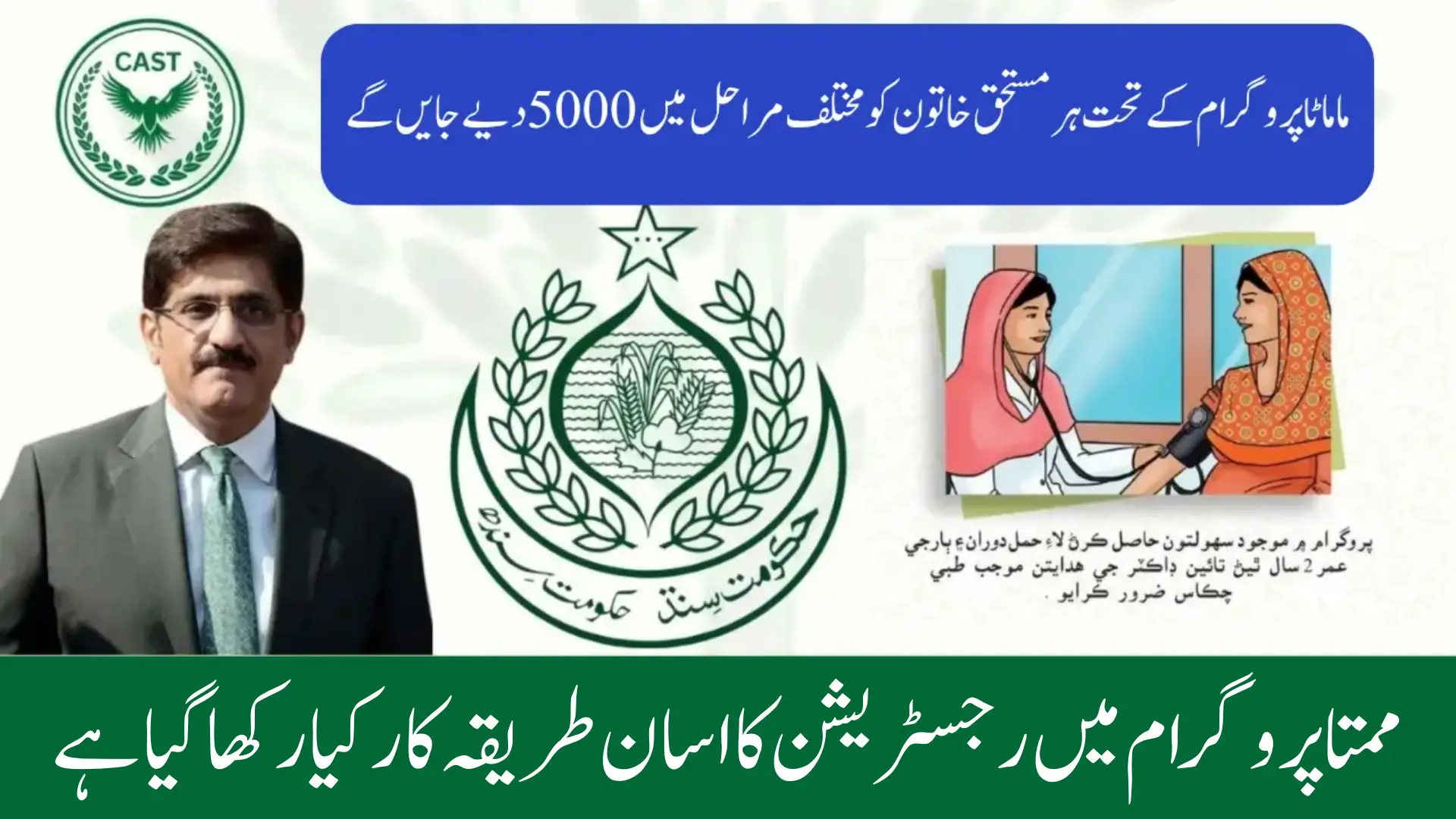
Sindh Mamata Program
Sindh Mamata Program has been expanded across the province starting November 2025, offering Rs.5000 per phase to pregnant and lactating mothers who require consistent healthcare and financial support. This program is designed to respond to the growing need for improved maternal care, nutrition, and safe delivery systems in both rural and urban regions. With many families struggling to afford medical checkups, transportation, and nutritious food during pregnancy, the government’s financial assistance aims to reduce both financial stress and health risks. The expansion has opened the program to thousands of new beneficiaries who previously did not receive support due to limited regional coverage.

The initiative also connects financial relief with planned healthcare visits. Mothers are required to engage with government health facilities, ensuring that they receive essential checkups for themselves and their newborns. This direct link between financial support and medical supervision creates a stronger and safer environment for maternal and child health. The program is fully free, easy to apply for, and backed by modern verification methods to ensure transparency and timely distribution of funds. Women who qualify can now receive quarterly payments without facing the difficulty of complex paperwork or multiple office visits.
To make the process clearer, this complete guide covers eligibility requirements, required documents, the registration procedure, safe payment collection, and recent improvements introduced by the Sindh government. Each section is written in simple, clear human language to ensure that every woman can understand how to apply and benefit from the Rs.5000 quarterly payment.
You Can Also Read: Parwaz Card Loans Up to 3 Million
Why the Sindh Mamata Program Matters
The Sindh Mamata Program plays a crucial role at a time when maternal health challenges continue to affect thousands of women across the province. In many low-income families, pregnant women often face malnutrition, weak immunity, and limited access to professional medical care. Such conditions increase the chances of unsafe deliveries, low birth weight, and medical complications. By offering financial support along with medical guidance, the program addresses both health risks and economic pressure, allowing women to focus on a safe and healthy pregnancy journey. This ensures mothers receive essential medical attention that otherwise might have been delayed due to financial barriers.
In addition to supporting mothers, the program aims to improve the overall health indicators of Sindh. Infant mortality and maternal mortality rates remain high in underserved districts, largely due to lack of proper nutrition and limited healthcare access. The Mamata Program encourages regular health facility visits, which helps in early detection of complications and ensures safe childbirth. By introducing a structured support cycle, the provincial government promotes healthier pregnancies and empowers women to prioritize their well-being throughout all phases of motherhood.
The program is designed to provide practical relief by easing the financial burden during pregnancy. It supports families in managing essential expenses and ensures that the health of both mother and child remains the top priority. Key benefits include:
- Financial assistance for nutritional needs and regular checkups
- Encouraging mothers to choose hospital-based, safe delivery services
- Reducing maternal and newborn health risks through continuous monitoring
You Can Also Read: BISP NSER Survey 2025 For New People Registration
Key Details of the Sindh Mamata Program
Since the expansion in November 2025, the Sindh Mamata Program has adopted a uniform support system for all eligible mothers across rural and urban areas. The program follows a quarterly payment cycle, ensuring that every mother receives regular assistance throughout her pregnancy and during the first two years of her baby’s life. This structure helps families plan their expenses more efficiently and ensures continuity of support during crucial development phases.
To help beneficiaries clearly understand the structure of the program, the following table summarizes the most important details. It provides a quick reference for women who want to confirm whether they qualify and how often the payments are issued. The table has been included naturally within the article to make the information easy to grasp at a glance.
| Point | Details |
|---|---|
| Installment Amount | Rs.5000 per phase |
| Beneficiaries | Pregnant and lactating mothers |
| Expansion Date | November 1, 2025 |
| Coverage | Rural and urban Sindh |
| Payment Cycle | Quarterly (every 3 months) |
The expansion of the program means that more health facilities are now linked to the Mamata initiative. This ensures that mothers in remote areas no longer have to travel long distances to register or collect payments. With improved support centers and updated digital verification, the entire process has become faster, more secure, and more inclusive.
You Can Also Read: Aghosh Program Reopens After Network Glitch Automatic
Eligibility Criteria for Mamata Program 2025
To ensure that the financial assistance reaches families who need it most, the Sindh government has set specific eligibility guidelines. These criteria help identify households facing economic hardship and ensure that the program’s resources are distributed fairly. Women must be registered residents of Sindh with a valid CNIC, and their family must fall within the NSER poverty score threshold. This approach enables targeted support for low-income families who rely heavily on government assistance during pregnancy.
The eligibility conditions also focus on healthcare engagement. Pregnant women and lactating mothers must be connected with government health facilities to qualify for the program. This requirement ensures that they receive essential medical supervision, which is vital for both maternal and child health. The registration system is linked to NADRA and BISP records to prevent duplication, fraud, or false entries. Women are encouraged to verify their details to avoid issues during the approval phase.
Eligible applicants include:
- Pregnant women with Sindh-issued CNIC
- Lactating mothers with children up to two years old
- Families with NSER poverty scores under the approved limit
- Women registered at government hospitals or health centers
Required Documents for Registration
To complete registration without delays, applicants must bring the correct documents when visiting their nearest health facility. These documents are necessary for identity verification, medical confirmation, and cross-checking through government databases. Carrying complete documents ensures a smoother process and prevents multiple visits, which can be difficult for pregnant women or mothers with infants.
The verification staff enters these documents into an integrated system connected to NADRA and BISP, which validates the information. Providing accurate and updated details is important for quick approval. Women are advised to keep their mobile number active, as SMS notifications are sent to the registered number regarding enrollment status and payment updates.
You Can Also Read: Punjab Matric & Inter Exam Dates 2026 Released
Required documents include:
- Mother’s original CNIC
- Husband’s CNIC for verification purposes
- Child’s B-Form (if already born)
- Proof of pregnancy issued by a doctor or lady health worker
- Mobile number registered on the mother’s CNIC
How to Register for Sindh Mamata Program
The registration process has been designed to be simple, accessible, and supportive for all eligible women. Applicants only need to visit a nearby government hospital or designated health facility where trained medical staff and lady health workers assist them through each step. Since the program is fully free, no applicant is required to pay any fee at any stage of the registration process. This approach ensures fairness and prevents exploitation.
During registration, lady health workers help fill out the forms and verify medical details. These forms are then uploaded into the system, where NADRA and BISP databases cross-check identity and eligibility. After verification, mothers are enrolled and added to the quarterly payment schedule. Once approved, the beneficiary is informed via SMS regarding her next steps and payment release dates.
Registration steps include:
- Visiting a government health facility linked with the Mamata Program
- Submitting CNIC and medical documents for verification
- Filling the registration form with the help of health workers
- Waiting for digital verification from NADRA and BISP
- Receiving quarterly payments upon approval
Payment Process and Safety Guidelines
The Sindh Mamata Program ensures that payments are delivered securely, transparently, and without any hidden charges. After approval, beneficiaries receive Rs.5000 every three months through digital financial services such as HBL Konnect, JazzCash, and Easypaisa. This multi-channel approach allows mothers to withdraw money from the closest authorized center without facing long queues or agent deductions. Payments are released in cycles, and beneficiaries are notified through SMS.
Biometric verification is required to collect payments, which minimizes the chances of fraud and ensures the amount reaches the rightful recipient. Mothers should carry their CNIC during withdrawal and should never share their fingerprints or identification details with unauthorized individuals. The government advises all beneficiaries to use their own phone numbers for program updates, avoiding reliance on third parties.
You Can Also Read: BISP Latest Alert Survey Only Closed in SIM Distribution Areas
For safety and transparency:
- Only collect payments from authorized centers
- Always request a printed receipt after withdrawing cash
- Do not pay any additional charges to agents
- Keep mobile number active for payment alerts
Common Issues and Quick Solutions
Despite the smooth process, some beneficiaries may face challenges related to verification, documentation, or biometric authentication. These issues are common and can be resolved easily with the right steps. For instance, if fingerprints are not recognized due to dryness or aging, updating biometric data at a NADRA center usually fixes the issue. Incorrect mobile numbers can delay SMS updates, so women should register a SIM card under their own CNIC as soon as possible.
Most problems occur due to missing documents or outdated information. To prevent rejections, beneficiaries should ensure all personal and medical records are accurate. If a mother faces payment delays, she can visit the nearest Mamata Program help center for quick assistance.
Common issues include:
- Biometric mismatch requiring NADRA update
- Incorrect mobile numbers needing SIM registration
- Payment delays resolved through support centers
- Document issues fixed by carrying all required records
Latest Updates – November 2025
The Sindh government has introduced several advancements to make the program more efficient and accessible. Faster verification through NADRA integration has reduced waiting times, and many mothers now receive approval within days instead of weeks. SMS alerts have also made communication smoother, helping mothers stay informed about payment releases, registration updates, and awareness sessions.
Additionally, the program has expanded to more than twenty new districts across Sindh. This broader coverage means that thousands of mothers living in previously underserved areas can finally access timely maternal care and financial support. The government has also organized awareness sessions to educate mothers about nutrition, safe delivery practices, and newborn care.
You Can Also Read: Punjab Housing Scheme Phase 3 to Provide Free Developed
Conclusion
The Sindh Mamata Program Rs.5000 Per Phase initiative remains one of the most important maternal health support systems in Sindh. By combining financial assistance with required medical checkups, the program ensures a healthier, safer, and more secure pregnancy experience for thousands of women. The quarterly payments allow families to manage essential expenses, while the mandatory checkups protect the health of both mother and child. Eligible women are encouraged to register at their nearest government health facility, bring all necessary documents, and use official payment channels for secure withdrawals.
FAQs
Q1: How much financial support is given?
Eligible mothers receive Rs.5000 every three months.
Q2: Who qualifies for the program?
Pregnant and lactating mothers with valid Sindh CNICs and NSER poverty scores below the limit.
Q3: Where can I register?
At any government hospital or health facility linked to the program.
Q4: Are there any charges for registration?
No, registration is completely free.
Q5: How are payments distributed?
Through HBL Konnect, JazzCash, Easypaisa, or authorized payment centers with biometric verification.