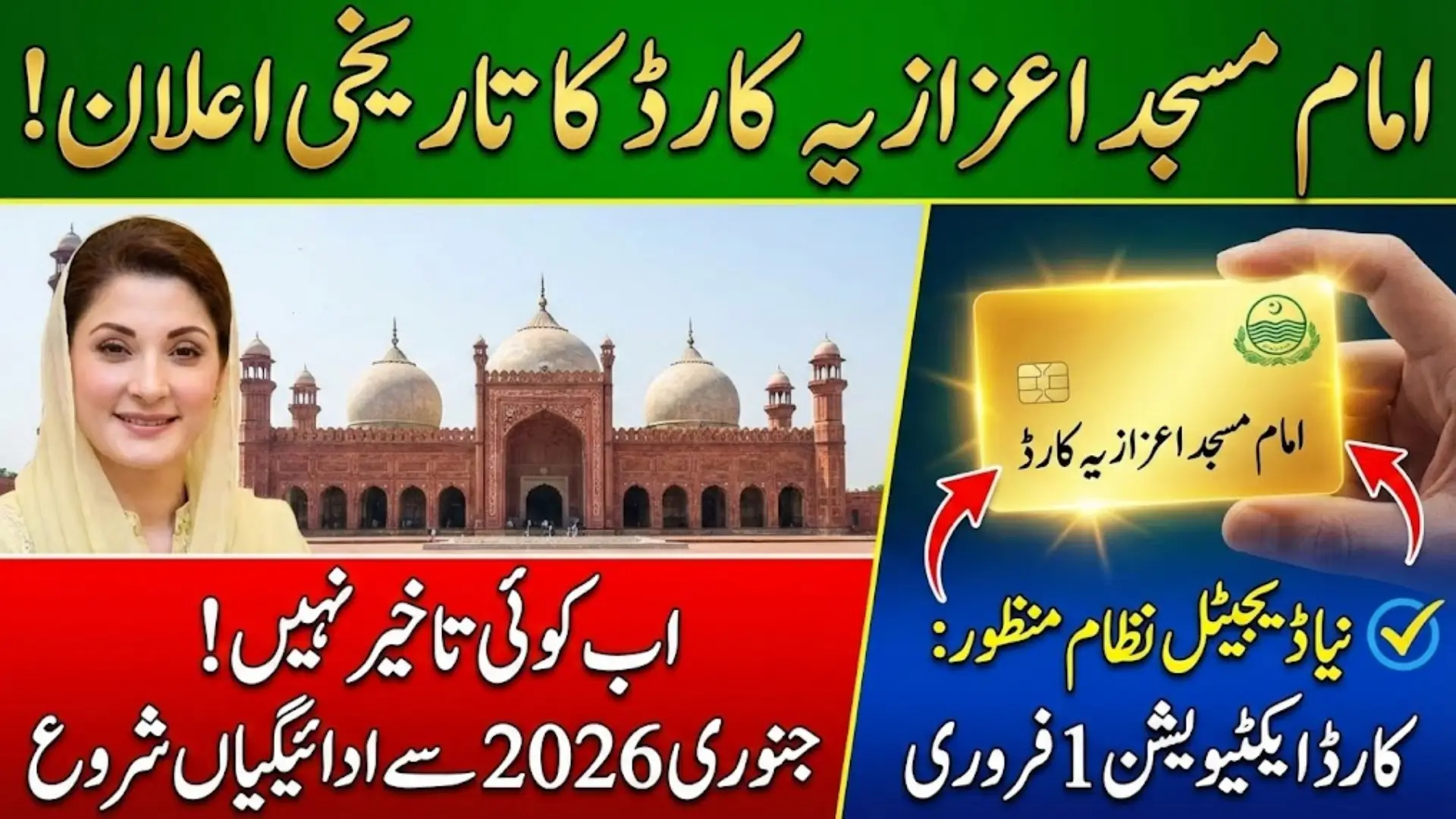
New Imam Masjid Honorarium Card
New Imam Masjid Honorarium Card Punjab government has taken a major step toward reforming how mosque imams receive their monthly honorariums. Under the leadership of Chief Minister Maryam Nawaz, a new digital system has been approved that replaces outdated manual processes with a transparent and structured model. This initiative focuses on improving accountability, eliminating payment delays, and establishing a modern financial structure that benefits both imams and administrative authorities. The shift toward a digitized system is expected to bring long-term improvements in the efficiency and fairness of honorarium distribution across Punjab.
The government has officially announced that honorarium payments will begin from January 1, 2026. Initially, payments will be issued through pay orders to ensure that imams do not face any interruptions. Once the digital infrastructure is fully activated, the newly introduced Imam Masjid Honorarium Card will start functioning from February 1, 2026. This transition period ensures uninterrupted financial support while the new system is deployed province-wide.
The government’s decision reflects its commitment to creating an improved administrative environment where mosque leaders receive support on time and within a fully documented and traceable system. Through this reform, the province aims to set a higher standard for public sector payment mechanisms.
You Can Also Read: Punjab Introduces Student Relief Measures During Traffic
Why the Change Was Necessary
For many years, the process of distributing honorariums to imams suffered from multiple weaknesses, mainly due to manual paperwork and the absence of centralized tracking. Payments were often delayed, records were difficult to verify, and many imams faced uncertainty due to inconsistencies in financial documentation. These issues highlighted the urgent need for a modernized system that could ensure fair, timely, and transparent distribution of funds. The government realized that without structural reforms, imams would continue facing unnecessary administrative obstacles.
The decision to introduce a digital system came after identifying gaps such as duplication risks, record mismatches, and poor monitoring mechanisms. With the introduction of a digital honorarium card, every payment will now have a secure electronic trail, reducing fraud and enhancing accountability. It will also simplify administrative processes for district-level officers who previously had to review scattered documentation and manual registers.
You Can Also Read: Punjab Traffic Fines 2025 Updated Rules Know Full Details
Weaknesses of the Old System
- Delayed payments due to manual processing
- High chance of duplication or mismatched data
- Lack of centralized financial tracking
- Difficulty in resolving payment disputes
- Irregular verification procedures due to outdated record-keeping
Implementation Timeline
The rollout of the new system has been carefully planned to ensure a smooth transition for all imams across Punjab. The government has structured the implementation in stages so that payments are not disrupted at any point. Beginning January 1, 2026, imams will continue receiving their honorariums through pay orders. This temporary method ensures financial continuity while the new digital card system completes its distribution phase.
From February 1, 2026, the official Imam Masjid Honorarium Card will be activated for digital transfers. This marks the beginning of fully electronic payment operations across the province. Following activation, the government aims to distribute all cards by February 2026, ensuring every verified imam is included within the system. This strict deadline reflects the administration’s commitment to timely and inclusive reform.
You Can Also Read: Online FIR Check by CNIC Punjab – Check Your Criminal
Payment Rollout Table
| Phase | Payment Method | Activation Date |
|---|---|---|
| Phase 1 | Pay Order System | January 1, 2026 |
| Phase 2 | Imam Masjid Honorarium Card | February 1, 2026 |
| Final Deadline | Full Card Distribution | February 2026 |
Features of the Imam Masjid Honorarium Card
The newly introduced Imam Masjid Honorarium Card is the centerpiece of the updated payment structure. Designed to increase reliability and transparency, the card will allow imams to receive funds directly without needing repeated office visits or paperwork. By transitioning to a secure digital method, the government seeks to reduce errors and simplify the overall payment process. Each transaction will be digitally recorded, enabling authorities to effortlessly track payment history and detect discrepancies.
The card will also provide a standardized method of financial support. Imams will be able to withdraw funds easily from designated locations while maintaining a clean, verifiable record of all payments. This creates an efficient system where imams experience less administrative burden and more financial clarity.
Key Benefits of the Card
- Direct monthly transfers into the imam’s card
- Secure PIN-based system ensuring safe withdrawals
- Complete digital history of transactions
- Reduced dependency on paperwork
- Faster processing compared to previous manual methods
You Can Also Read: Phase 2 Eligibility Is Based on Poverty Means Test Verification
Registration and Verification Progress
The government has received 62,994 registration forms from imams across Punjab. These applications are currently undergoing a multi-step verification process designed to ensure accuracy and prevent fraudulent entries. Verification teams are examining identity documents, cross-checking mosque affiliations, and filtering out any duplicated or incorrect submissions. This careful screening ensures that only eligible individuals receive the honorarium card and that all records are transparent and accurate.
Chief Minister Maryam Nawaz has emphasized that the registration system must remain open and accessible until every eligible imam is included. To prevent any individual from being excluded due to administrative delays, the government has instructed departments to maintain efficient workflows. The final card issuance deadline has been fixed for February 2026, giving enough time for proper verification and distribution.
Verification Includes
- Identity confirmation through official documents
- Verification of mosque assignment and role
- Detection and removal of duplicate entries
Oversight and Administration Through New Committees
To ensure integrity and clarity in the new payment system, the government has formed mosque management committees and tehsil management committees. These bodies will monitor the registration, verification, and payment disbursement processes. Their role is critical in ensuring fairness and preventing misuse of government funds. By keeping records updated and resolving issues locally, these committees aim to maintain a transparent environment.
Assistant commissioners will also hold monthly meetings with local imams. These meetings serve as an important communication channel for identifying issues, discussing administrative needs, and monitoring community-level developments. By involving multiple layers of governance, the government is ensuring that the system remains accountable from local levels to provincial authorities.
You Can Also Read: 8171 Payment SIM Verification
Responsibilities of Committees
- Overseeing honorarium distribution
- Managing local imam records
- Ensuring authentication and verification
- Addressing payment-related complaints
- Reporting irregularities to authorities
Accountability and Suspension Rules
Strict accountability measures have been implemented to maintain the credibility of the new payment system. The government has clearly outlined circumstances under which an imam may face suspension from receiving honorariums. If an imam is found involved in activities against national interest, moral misconduct, or financial wrongdoing, immediate suspension will be enforced. These rules ensure that public funds are only granted to individuals who uphold ethical and legal standards.
The suspension mechanism has been designed to protect the program’s integrity. While the objective is to support mosque imams, the government also recognizes the importance of strict discipline. The monitoring committees will be responsible for identifying such violations and reporting them.
Grounds for Suspension
- Involvement in any activity harmful to national interest
- Engagement in immoral or unethical behavior
- Participation in financial fraud or wrongdoing
Security Coordination Measures
In addition to financial reforms, the government has linked the new payment system with broader community safety measures. Assistant commissioners have been instructed to hold regular coordination meetings with imams to discuss local challenges, security concerns, and administrative needs. These meetings promote a safer environment and allow mosque leaders to share information relevant to community well-being.
Authorities have also been directed to continue combing operations in sensitive areas and strengthen digital monitoring of individuals placed on the Fourth Schedule. This ensures that the payment system aligns with the province’s security priorities and that imams remain informed about ongoing administrative strategies.
You Can Also Read: Traffic Challan Psid Check Online And Pay Using Jazzcash
Benefits for Imams and Communities
This new system offers multiple advantages to both imams and the communities they serve. The digital framework eliminates delays, enhances clarity, and provides imams with a stable and predictable payment model. Imams will no longer have to depend on manual paperwork or uncertain timelines. With faster and transparent governance, community members will also benefit from improved leadership stability within local mosques.
The initiative supports long-term institutional reforms by reducing errors and creating reliable payment records. It will also enhance public trust and provide mosques with improved administrative support. As the system matures, communities will experience more consistent leadership and better communication between imams and local authorities.
Major Benefits
- Faster and more reliable payment process
- Stronger financial transparency for imams
- Better coordination between mosques and government
- Reduced administrative workload and paperwork
- Clear financial documentation for future use
Challenges and Implementation Considerations
Despite the many benefits, some challenges may arise during implementation. Regions with limited access to digital infrastructure may face delays in card distribution. Imams unfamiliar with digital systems may require guidance on using the new card. Additionally, verification bottlenecks may temporarily slow down the overall process in districts with a high volume of applicants.
To address these challenges, the government is expected to provide administrative support and training where needed. Local committees will also assist imams in understanding card usage and resolving technical issues. With proper coordination, these challenges can be managed effectively without affecting payment timelines.
Possible Challenges
- Card distribution delays in remote districts
- Digital literacy gaps among some imams
- Verification congestion during peak stages
FAQs
When will the new payment system start?
Payments will begin on January 1, 2026 through pay orders.
When will the digital card become active?
The Honorarium Card system will be fully active from February 1, 2026.
How many imams have registered?
A total of 62,994 imams have submitted registration forms.
Who will monitor the distribution process?
Mosque management committees and tehsil committees will monitor the system.
What can lead to suspension from the program?
Any imam involved in misconduct, illegal activity, or financial wrongdoing will be suspended.
Conclusion
The New Imam Masjid Honorarium Card System is a progressive step toward modernizing financial support for mosque imams across Punjab. By replacing outdated manual processes with a secure digital framework, the government aims to enhance transparency, ensure timely payments, and strengthen administrative coordination. With proper oversight and clear guidelines, this new system promises long-term improvements in religious, administrative, and community structures. As imams complete their verification and receive their cards, the initiative will bring stability and efficiency to the honorarium process for years to come.