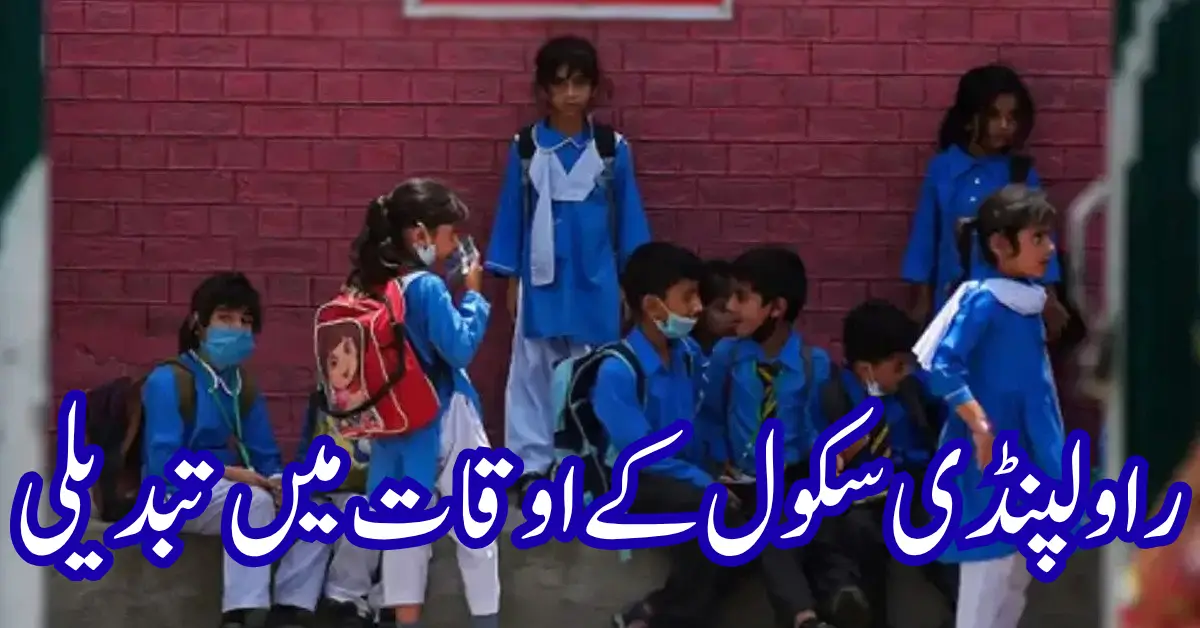
Rawalpindi School Timing Change
Rawalpindi School Timing Change decision to change school timings in Rawalpindi during November 2025 has created a strong reaction among parents, teachers, and students. While the local administration introduced the earlier schedule to improve traffic flow near Kachehri Chowk, many families believe the move is creating unnecessary pressure on children during the cold season. The change has brought health concerns, transport issues, and academic disruptions that families say cannot be ignored.
Parents argue that the early start forces children to leave home before sunrise, often in freezing temperatures and heavy fog. This, they say, affects not only students’ safety but also their energy levels and classroom performance. As a result, the new timing for both summer and winter months has become a widely debated issue in the city.
You Can Also Read: BISP Payment Alert: Beneficiaries to Collect Funds
Why the School Timings Were Changed
The Rawalpindi administration announced the new schedule as part of a traffic management strategy for the busy Kachehri Chowk area, where major underpass and overhead bridge projects are underway. Officials claim that early school timings would reduce vehicle congestion during peak office hours and help maintain traffic flow.
However, parents say the decision was taken without considering the seasonal realities. Rawalpindi faces extremely cold mornings in November, with fog, low visibility, and below-freezing temperatures that make early travel risky for young students. Many believe the traffic plan could have been implemented through alternate measures instead of altering school hours.
Key reasons behind the timing change include:
- Ongoing construction work near Kachehri Chowk
- Attempts to reduce traffic pressure during morning rush hours
- Coordination with city-wide development projects affecting major roads
You Can Also Read: Ehsaas Nojawan Program November 2025 Registration Process
Parents’ Reaction to the Early Schedule
Parents from multiple Rawalpindi neighbourhoods have strongly opposed the decision and even submitted a written application to the Deputy Commissioner. They requested restoration of the old timings—8:45 a.m. or 9:00 a.m.—arguing that the revised winter schedule is unsuitable for children’s health and safety.
Groups of parents have repeatedly highlighted that the early start increases the chances of illness due to fog, cold winds, and exposure to low temperatures. Some families have threatened to shift their children to nearby private schools if the administration does not act immediately.
Parents’ main concerns include:
- Early mornings are too cold and unsafe
- Children are developing cough, fever, and ear infections
- Lack of vans and transport at earlier hours
- Increased absenteeism and late arrivals
Health and Safety Challenges for Students
Cold weather in Rawalpindi is known for causing respiratory issues, especially among school-going children. When students leave home in fog, their immunity becomes vulnerable, leading to frequent sickness. Parents say the new timings are making it difficult for children to maintain their health during the harsh winter season.
Teachers have also noticed that many students arrive tired, sleepy, or unwell, which affects their ability to concentrate. These morning challenges have resulted in disrupted class routines and slower learning patterns in most government schools.
Common health risks observed:
- Cough and cold
- Chest congestion
- Ear infections
- Fatigue and low energy
You Can Also Read: Punjab Govt Blocks Promotion of 11000 Teachers
Effect on Classroom Performance and School Attendance
School administrators have reported drops in punctuality and attendance ever since the new schedule was implemented. Students relying on vans or public transport face the biggest difficulty, because most transport services do not operate so early in the morning. This delay pushes many students to walk long distances in cold weather.
Teachers say classroom activity has slowed down, as students take longer to settle and remain less alert during the first few hours of school. Parents believe the timing change is affecting academic performance in ways that will become more noticeable over time.
Impact noticed in schools:
- More late arrivals
- Lower concentration in early periods
- Disrupted lesson flow
- Tired and sleepy students
Somparison of Old vs. New School Timings
Below is a natural comparison of the school hour changes introduced in Rawalpindi:
| Aspect | Old Timing (Before Change) | New Timing (After Change) |
|---|---|---|
| Start Time | 8:45 a.m. – 9:00 a.m. | 7:45 a.m. – 8:00 a.m. |
| Weather Condition | Mild morning cold | Heavy fog, very cold |
| Transport Availability | Regular | Limited |
| Attendance Pattern | Stable | Decreased |
| Parent Satisfaction | High | Low |
Transport and Accessibility Problems
One of the biggest challenges created by the timing change is the shortage of school vans and public transport during early morning hours. Many families depend entirely on vans, as they cannot drive children daily. When vans fail to arrive on time, students miss important lessons or reach school late.
Public transport is also inconsistent early in the morning, making it nearly impossible for some students to reach school safely. Parents say the administration failed to coordinate with transport providers before announcing the new schedule.
Transport issues raised by parents:
- Vans do not operate early
- Rickshaws charge higher fares in winter
- Public buses are overcrowded or unavailable
- Long walking distances in unsafe weather
Traffic Management Plan by Authorities
Authorities claim the new timings are temporary and will help reduce heavy traffic at Kachehri Chowk, which is undergoing multiple construction projects. The development of an underpass and overhead bridge has severely impacted traffic flow, creating long queues during school and office hours.
According to officials, starting school earlier can distribute traffic more evenly across the morning. However, parents argue that alternate solutions should have been considered before shifting children’s schedule during winter.
You Can Also Read: 8171 November 2025 Update NADRA Biometric Verification
Possible alternate traffic solutions include:
- Adjusting government office hours
- Temporary diversions for heavy vehicles
- Special traffic wardens during morning peak times
- Improved traffic light synchronization
Possible Alternatives Suggested by Parents
| Proposed Solution | Expected Benefit |
|---|---|
| Restore old school timing | Reduced health issues for students |
| Change office timings | Better traffic flow without affecting children |
| Provide temporary school vans | Easier commute during cold months |
| Improve fog-related safety measures | Safer travel for young students |
Community Action and Next Steps
Parents’ written appeal to the Deputy Commissioner urges authorities to reconsider the decision immediately. They emphasize that traffic issues should never outweigh children’s health and safety, especially during the coldest months of the year.
Many families have warned that if the schedule remains unchanged, they will transfer their children to private schools with more reasonable winter timings. The administration is expected to review the complaints and possibly consult with traffic experts before making a final decision.
Conclusion
The Rawalpindi school timing change of November 2025 has triggered serious concerns among parents, teachers, and students. While the intention behind the new schedule is linked to traffic management, the side effects on children’s health, safety, and learning cannot be ignored. Families are urging officials to restore the earlier winter timings or revise office hours instead of forcing young children to travel in harsh weather.
Only a balanced decision—one that considers both civic needs and student welfare—can solve this issue without affecting the education system in the long run.
You Can Also Read: Apni Chat Apna Ghar Application Portal For Online Registration